






































In a beauty landscape increasingly defined by subtlety, brow lifts and blepharoplasty (the surgical refinement of the eyelids) have quietly become the gold standard for those seeking to look unmistakably refreshed rather than overtly done. Two things cause a heaviness in the upper eyelid area: excessive upper eyelid tissue, either skin or muscle, and the falling of the brow, causing brow skin to descend and contribute to laxity of the upper eyelid.
“I am noticing more people interested in an upper blepharoplasty and/or browlift because they are seeing it identified as a treatment someone recognizable has had,” says Dr. Jason B. Diamond, a double board-certified facial plastic surgeon and founder of The Diamond Face Institute, Beverly Hills, CA. “They are open to it as a first line treatment towards rejuvenating the upper third of their face. I am also noticing less public demand for “filler under the eyes” due to the widespread backlash in the aesthetic world to this procedure based on unskilled or aggressive techniques that have become prevalent over the past decade. However, when done judiciously and by the right hands, it can still be a non-surgical option when we cannot perform facial fat grafting–which is my favorite method to restore volume loss to the lower eyelids.”
So what is a good upper blepharoplasty candidate? “A good upper blepharoplasty candidate is someone who has a heavy or saggy upper eyelid that is not related to descent of their brow, or someone whose heaviness of the upper eyelid can not be corrected with a browlift,” says Dr. Diamond. “Reasons can range from the current position of eyebrows (i.e. if the distance between the brow and eye is already significant and shouldn’t be increased due to facial harmony) to the size of the forehead and more.” A browlift can also be a very effective technique to correct saggy upper eyelids. “When the brow descends and the volume of the brow region decreases, the upper eyelids get heavier,” says Dr. Diamond. “This is due to bone reabsorption, muscle weakening and fat loss as we age. In these circumstances, a browlift can be an even better option to correct the upper eyelids than an upper blepharoplasty. You are able to improve the position of the brows, address the lax skin of the brow-bone, and by default, you are getting an improvement/lift to the laxity of the upper eyelid skin.
For whom is a brow lift a good add-on to a blepharoplasty? “A browlift is a good add-on when the brow descent is a reason the upper eyelids look aged,” says Dr. Diamond. “It is also a good add on when there is a significant amount upper lid heaviness on someone who wants a more natural conservative result. The combination of upper bleph and browlift is more conservative and allows for a shorter blepharoplasty scar than an aggressive upper blepharoplasty. It is also a good add-on when there is lax skin in the temporal and forehead region that we simultaneously address with a browlift, providing more of a widespread result in a lifting aspect in addition to solely the upper eyelid skin. Oftentimes, when someone is relying solely on an upper blepharoplasty to revive their aged eye appearance, too much skin is removed, and the integrity of the eye shape is compromised. They look completely different afterwards, and that is never the goal with great work.” So in other words, a browlift plus blepharoplasty is sometimes more conservative than an upper bleph alone.
For mild droopiness, not excess skin, Botox and other neurotoxins, when injected properly and by a skilled professional, can lift the brows, causing the eyelids to appear less saggy and the eyes more open. “However, neurotoxin injections are not a suitable solution for patients who have a lot of excess skin on and around the lids, or ptosis (a condition in which the eyelid muscle is weak),” says board-certified dermatologist Dr. Dendy Engelman of the Shafer Clinic in Midtown Manhattan. What about other injectables? “For patients who have hooded eyes and/or mild drooping, filler can also be an appropriate solution,” says Dr. Engelman. “When injected into the correct areas of the face, it can create a lifting effect that raises the lid and opens up the eye area.”
Not Ready to Go Under the Knife?
Blepharoplasty surgery offers great results but before you book, consider these non-invasive options. “Non-invasive or less invasive options may be best for patients with mild drooping and sagging,” says Dr. Engelman. “If the patient is only interested in a small adjustment, these treatments are an ideal substitute for surgery. They can also be a great way to maintain more tightness and lift of the eyelids for a longer period of time, before getting surgery.”
Dr. Diamond’s Metacine’s EyeLift
As we age, our skin naturally loses volume due to a decrease in the synthesis of collagen, hyaluronic acid and other essential skin molecules, especially in the delicate eye area. Dr. Diamond’s Metacine’s new EyeLift is a targeted, clinically validated bioserum formulated to accelerate the skin’s natural bioremodeling processes. This advanced formula lifts, firms and refines, effectively reversing signs of visible aging while enhancing the volume and contours around the eyes. EyeLift represents a new generation of physician-developed, biomimetic skincare technology, validated by science and clinical testing to interact with the skin’s intrinsic molecular and biological network to deliver remarkable and transformative eye rejuvenation.
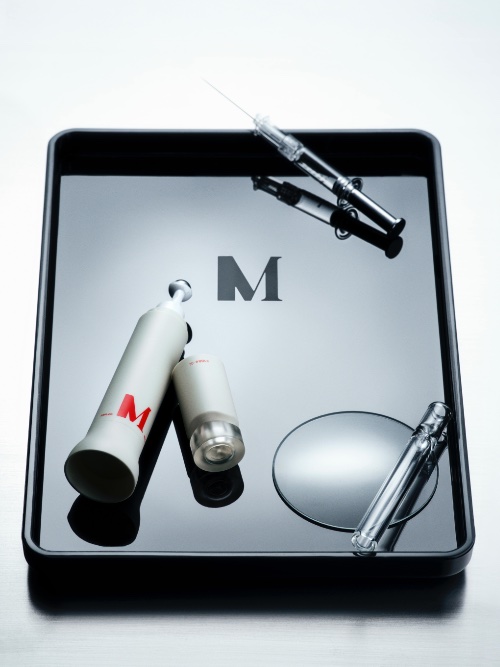
- EyeLift, $225, DR. DIAMOND’S METACINE, drdiamondsmetacine.com
Upneeq
Upneeq is the first and only FDA-approved prescription eye drop clinically proven to lift upper eyelids for adults with low-lying lids (also known as acquired blepharoptosis). The once-a-day eye drop offers a simple, non-invasive option to visibly open and awaken the eyes—albeit temporarily. “It’s incredibly easy and the clinically backed results appear quickly and last up to eight hours,” says Dr. Engelman.
Everesse
The Everesse device leverages single pulse energy delivery to ensure the release of consistent radiofrequency (RF) energy without treatment gaps, ensuring sustained thermal energy in both the papillary and reticular dermis. “I love Everesse,” says Dr. Engelman. “Patients typically notice results immediately after the treatment, with optimal results in three to four weeks.” This painless and quick 30-minute therapy can be done twice, two to three months apart, and results are seen instantaneously. “During an RF treatment, radiofrequency waves penetrate deep into the skin, heating lower layers of the dermis in order to stimulate collagen and elastin synthesis and create a firming effect,” she says.