




















There’s a particular kind of ski panic that sets in when the west doesn’t deliver record snowfall by mid-January. Social feeds go quiet. Group chats spiral. Thoughts of the Caribbean replace visions of aprés. But Utah—quietly, confidently—keeps skiing just fine.
The mistake most travelers make is assuming great skiing requires perfect conditions. In reality, it requires terrain that skis well, mountains that manage and produce snow intelligently, and an itinerary that understands when to lean into popularity, and when to leave it behind.
At a time when Colorado is attempting to crisis-control massive cancellations at its flagship resorts, ski aficionados are still heading outside Salt Lake City, Utah. Here’s a long weekend itinerary for how to ski Utah the right way: equal parts iconic and under-the-radar, polished without feeling precious, and built around the mountains where snow actually feels good on your skis.
Park City, But Make it Subtle
Yes, Park City is popular. That can be a flaw or a bonus – depending on how you approach it.
Forego the popular base areas and bustling Main Street and head to Silver Star at Park City, a quieter pocket just off the main village where ski-in/ski-out feels residential rather than resort. Book a stay with a condo with Natural Retreats. These spacious, multi-bedroom retreats have everything you could possibly want out of a ski home minus the “Home Goods at the mountain” aesthetic. Think open and airy living spaces, multiple terraces (including one with a private hot tub), fireplaces, stacks of board games and an open concept kitchen featuring high-end appliances should you decide to cook (but why?). Just a stone’s throw from the Silver Springs lift, it’s ski on/ski off without the fuss.
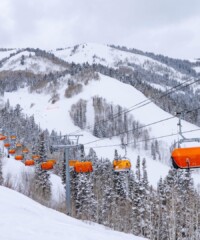
On snow, Park City Mountain is a groomer dream in leaner snow years. Long, beautifully maintained runs off the Park City side, particularly off McConkey’s Express chairlift, deliver consistency when other mountains feel scraped. It’s confidence-boosting skiing—ideal for warming up legs and easing into altitude.
For dinner, skip the tourist traps and head to Twisted Fern—an unfussy, local restaurant on the edge of town that’s warm, modern and ingredient-driven. It’s refined comfort food done right after a full ski day. Back at the quiet Silver Springs base, Silver Star Cafe is an intimate and beloved local eatery that delivers classic mountain après energy with a neighborhood feel. It’s casual but convivial, the kind of place where kids are welcome, families are celebrating birthdays and the steaks are fired up to perfection.
The Cottonwoods: Where Utah Gets Real
An hour south of Park City, Big Cottonwood Canyon feels like crossing into a different Utah altogether. The road narrows, the light sharpens and the mountains press closer—more intimate, more serious. This is where locals go when they want to ski, not to be seen skiing.
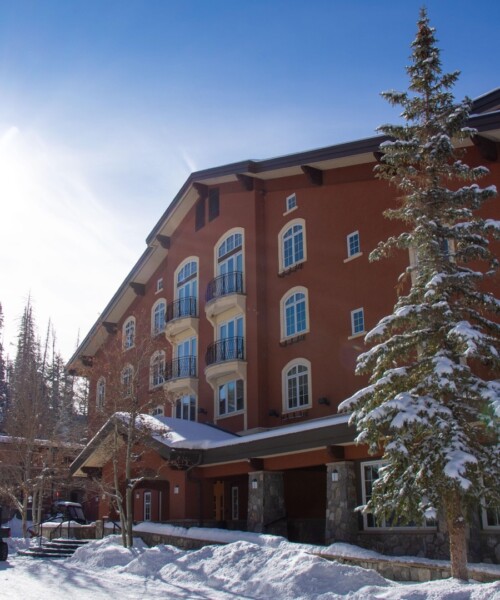
Base yourself at The Inn at Solitude, which sits directly at the base of Solitude Mountain. The appeal is immediate and refreshingly understated: no scene, no spectacle—just skiing. The inn has everything you want from a mountain stay and nothing you don’t. A heated pool and hot tub for post-ski decompression. An intimate library bar that feels more Alpine lodge than après circus. And St. Bernard’s—a surprisingly strong restaurant that understands the rhythm of a ski day. In the morning, it turns out a small, efficient breakfast spread designed to get everyone on the mountain quickly. By night, it transforms into something far more transportive: an Alpine village dining room serving European slopeside classics. Think tartiflette-style potatoes, rich short ribs, fondue-adjacent comfort dishes.
Solitude itself is a standout in variable snow years. Its north-facing terrain preserves coverage, keeping snow chalky and forgiving even when conditions elsewhere deteriorate. Mogul fields stay soft. Groomers hold an edge long after other mountains begin to feel scraped and defensive. The skiing here is unflashy but deeply satisfying—the kind that rewards patience, flow and repetition. You find a run you love, then ski it again. And again. And again. At Solitude, skiing doesn’t feel like a performance. It feels like the point.
Take a Day at Brighton—a Local Favorite
If Solitude is composed and understated, Brighton Resort is joyful and unapologetically itself. Long known as the locals’ mountain, it has somehow managed to stay that way—unpolished, un-performative, and deeply focused on skiing. Brighton excels in the kinds of conditions that unsettle flashier resorts. Its snow stays chalky, its trees protect coverage and its terrain skis beautifully even in leaner years.
One of Brighton’s quiet advantages is how seamlessly it connects to Solitude. Confident skiers can traverse between the two via the SolBright trail, a high-alpine crossover that allows you to ski from Solitude into Brighton without ever stepping into a car. One moment you’re carving Solitude’s north-facing terrain; the next, you’re dropping into Brighton’s playful tree runs. It’s efficient, unshowy, and distinctly Utah.
The base area reflects the mountain’s ethos. There’s no curated aesthetic, no flashy après—just skiers refueling, swapping stories and heading back out. Lunch is casual and communal at lodges or the Milly Chalet bistro—delivering warm food, quick service, no fuss. When the lifts stop spinning, most skiers drift back across the canyon toward Solitude, where dinner at St. Bernard’s offers a natural coda to the day. It’s two distinct mountains, one seamless ski experience.
Utah doesn’t need perfect conditions to deliver a great ski weekend. Its advantage lies in terrain, orientation, and restraint—mountains that ski well even when snowfall totals aren’t headline-worthy. Do Utah right, and the snow always shows up where it matters most.