




















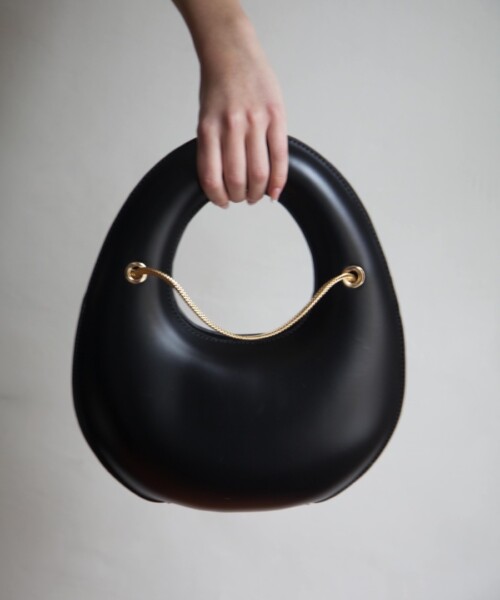
In a city that thrives on speed, spectacle and the relentless churn of trends, Nahall is doing something far more subversive: taking its time. The New York City-based handbag label, founded by designer Tiffany Yaraghi Nader, arrives not with bombast but with intention—a slow-grown brand rooted in the idea that luxury should feel as natural in motion as it does on display. The name itself offers a clue. “Nahall,” which translates to “little plant” in Persian, is both the designer’s middle name and a guiding metaphor: something small, carefully nurtured, allowed to grow on its own terms. It’s a fitting origin story for a brand that reportedly spent nearly a decade in gestation before launching—ultimately taking shape shortly after the birth of Tiffany’s first child. There’s a sense, in every detail, of something deeply considered rather than hastily produced. The silhouettes are refined but never rigid: top-handle handbags that feel polished yet unfussy, crossbodies that move easily from morning errands to evening plans and petite clutches that carry just enough without sacrificing elegance. Totes and mini bags round out the offering, each designed with the same balance of proportion and practicality.
Materiality plays a central role. A mix of vegan and leather options reflects a modern sensibility, while thoughtful color palettes and subtle prints add dimension without overwhelming the form. Price-wise, Nahall sits comfortably in the contemporary space, with most pieces priced under $500. It’s a strategic positioning—accessible enough to invite discovery, but considered enough to maintain a sense of rarity. That rarity is reinforced by the brand’s small-batch production model and boutique distribution, a deliberate move away from mass-market saturation in favor of something more intimate.
In an era where so many brands are engineered for virality, Nahall’s appeal lies in its restraint. It’s not chasing the moment—it’s building a wardrobe staple. A handbag not just as an accessory, but as a companion piece: functional, expressive and quietly luxurious. Like the “little plant” it’s named for, Nahall is still growing. But its roots—personal, purposeful and deeply grounded—suggest a longevity that feels increasingly rare.